Most jewellery goes online through a template that treats a hand-set kundan piece like a phone case. We designed the opposite: a storefront where the photograph is the interface, browsing works by occasion as well as by piece, bridal sells as a matched set, and the checkout is built around how this market actually pays. It is live, and every screen below is the shipped store.
- Sector
- Artificial & bridal jewellery
- Scope
- Brand mark, storefront design, merchandising
- Market
- Pakistan · rupee pricing · Cash on Delivery
- Status
- Live · rebuildable for another brand
Every screen, in order.
Arrive, browse, choose, pay — the same path a shopper takes. Pick a screen from the menu; the numbers follow the journey rather than the file list.
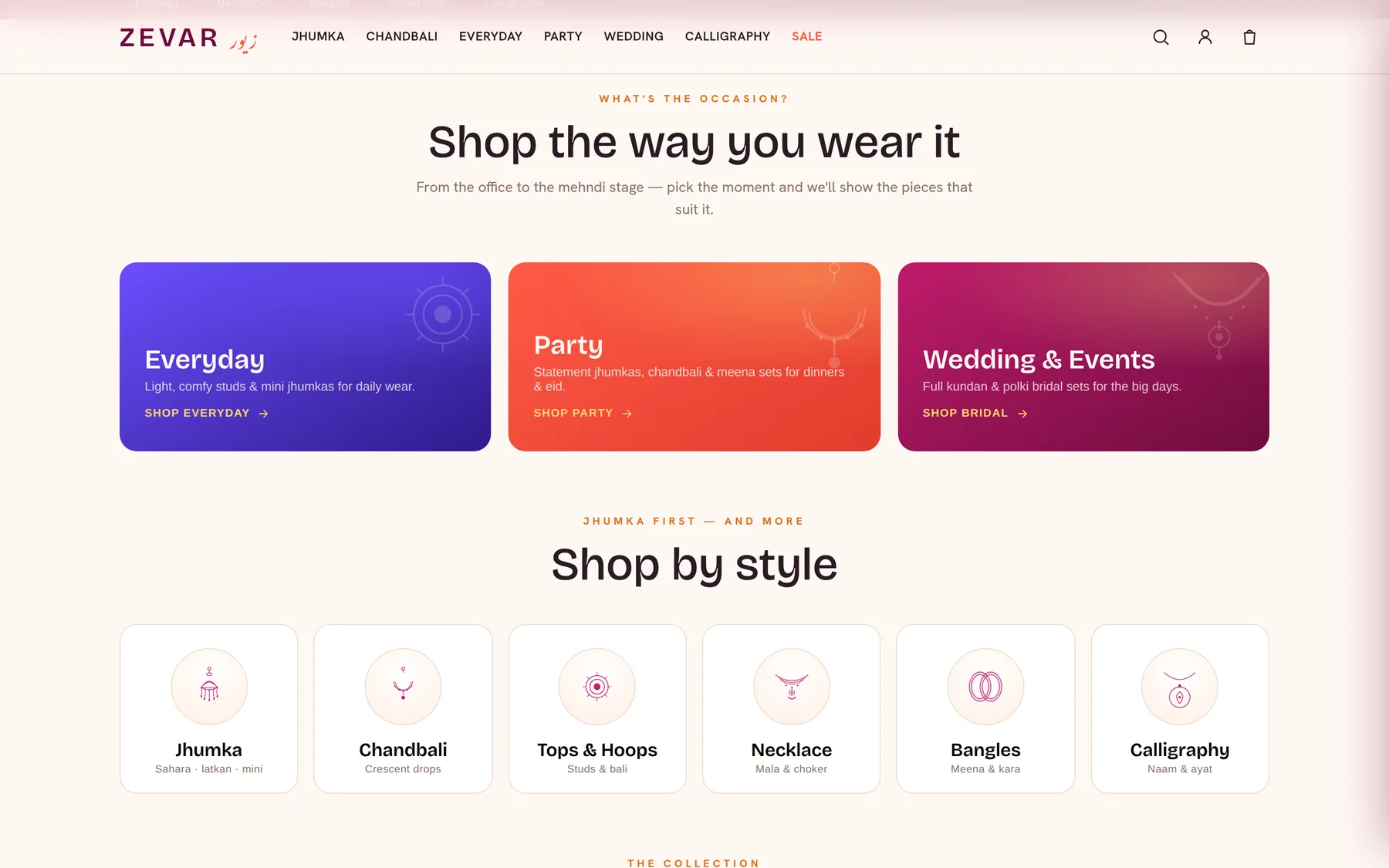
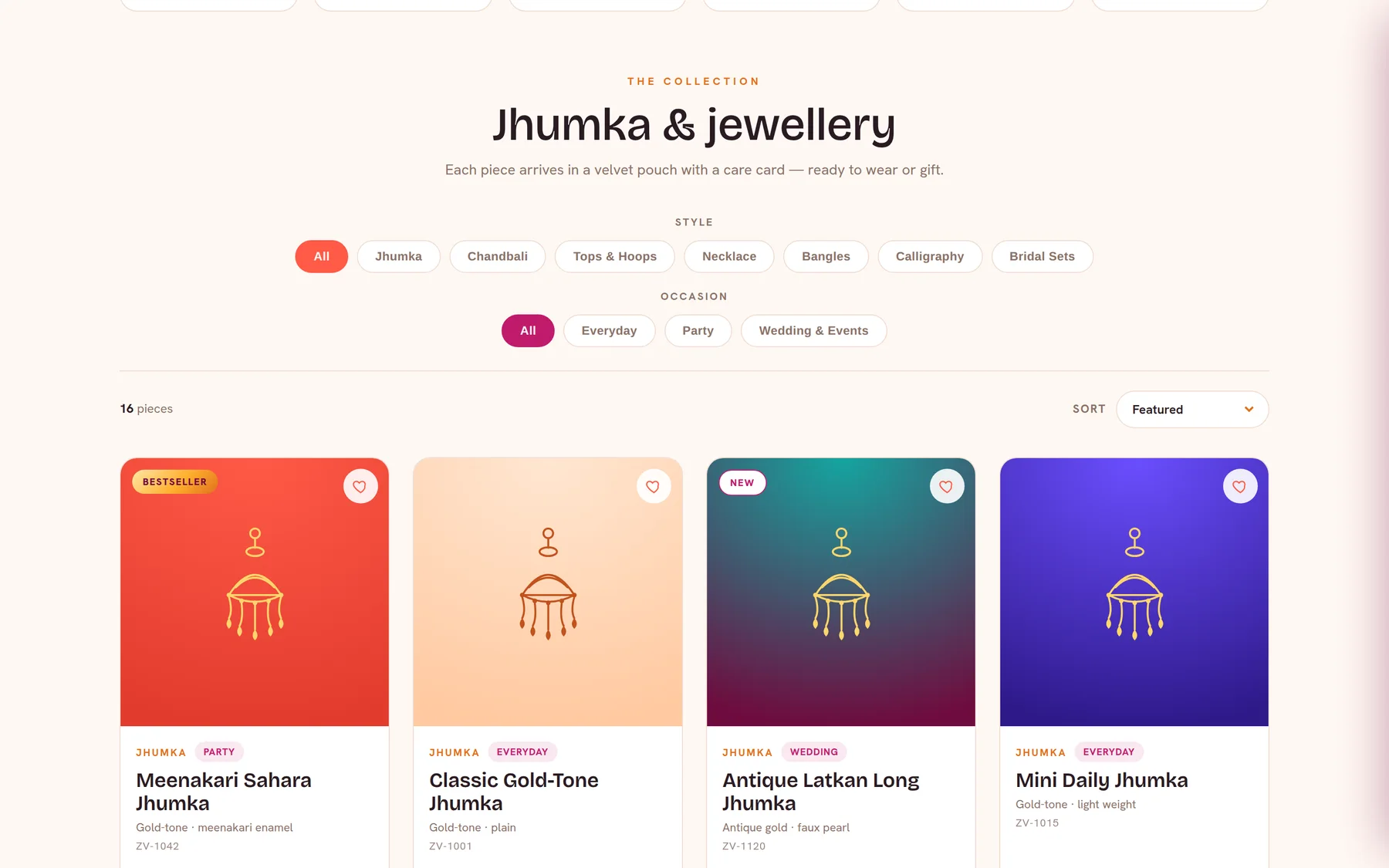
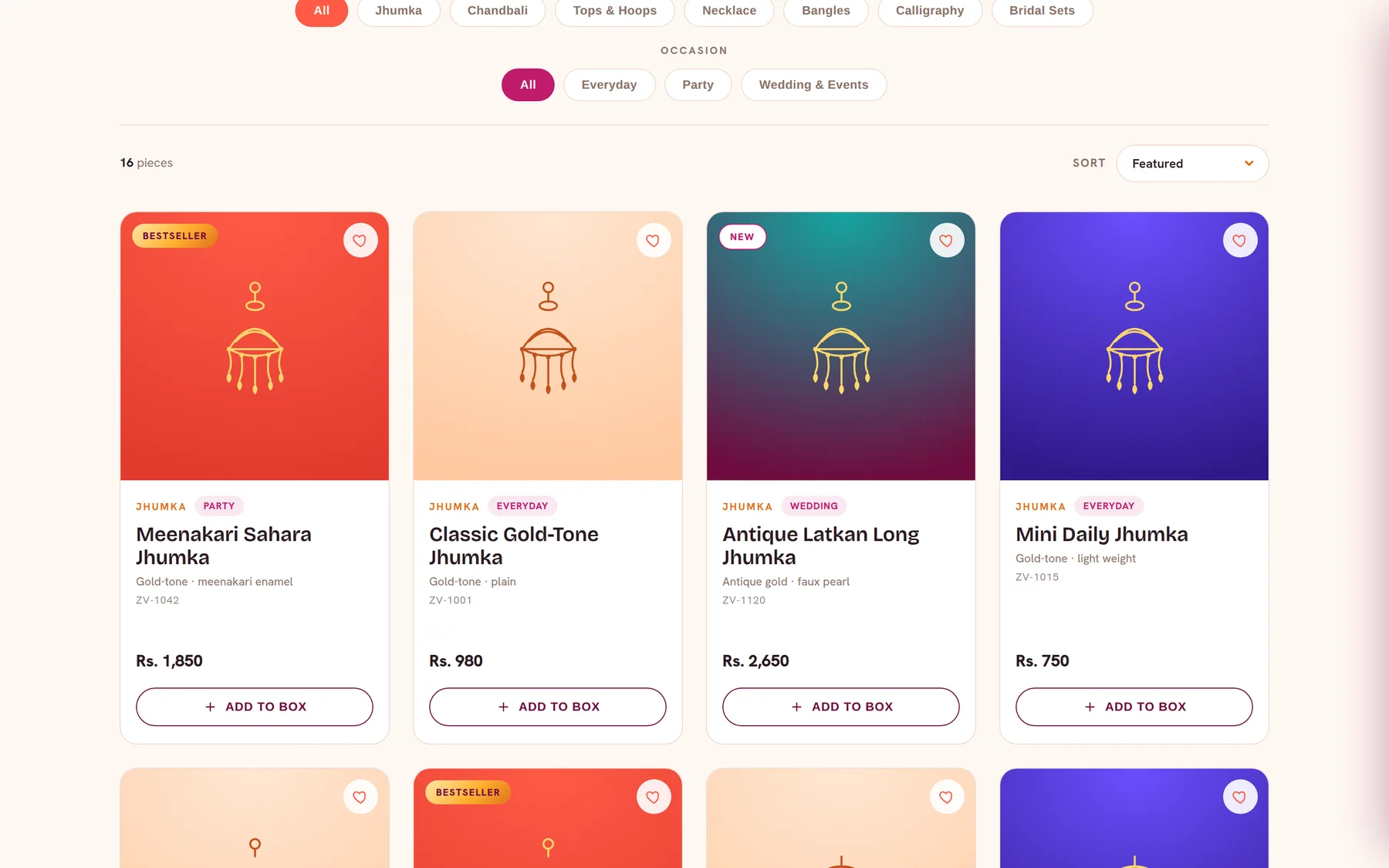
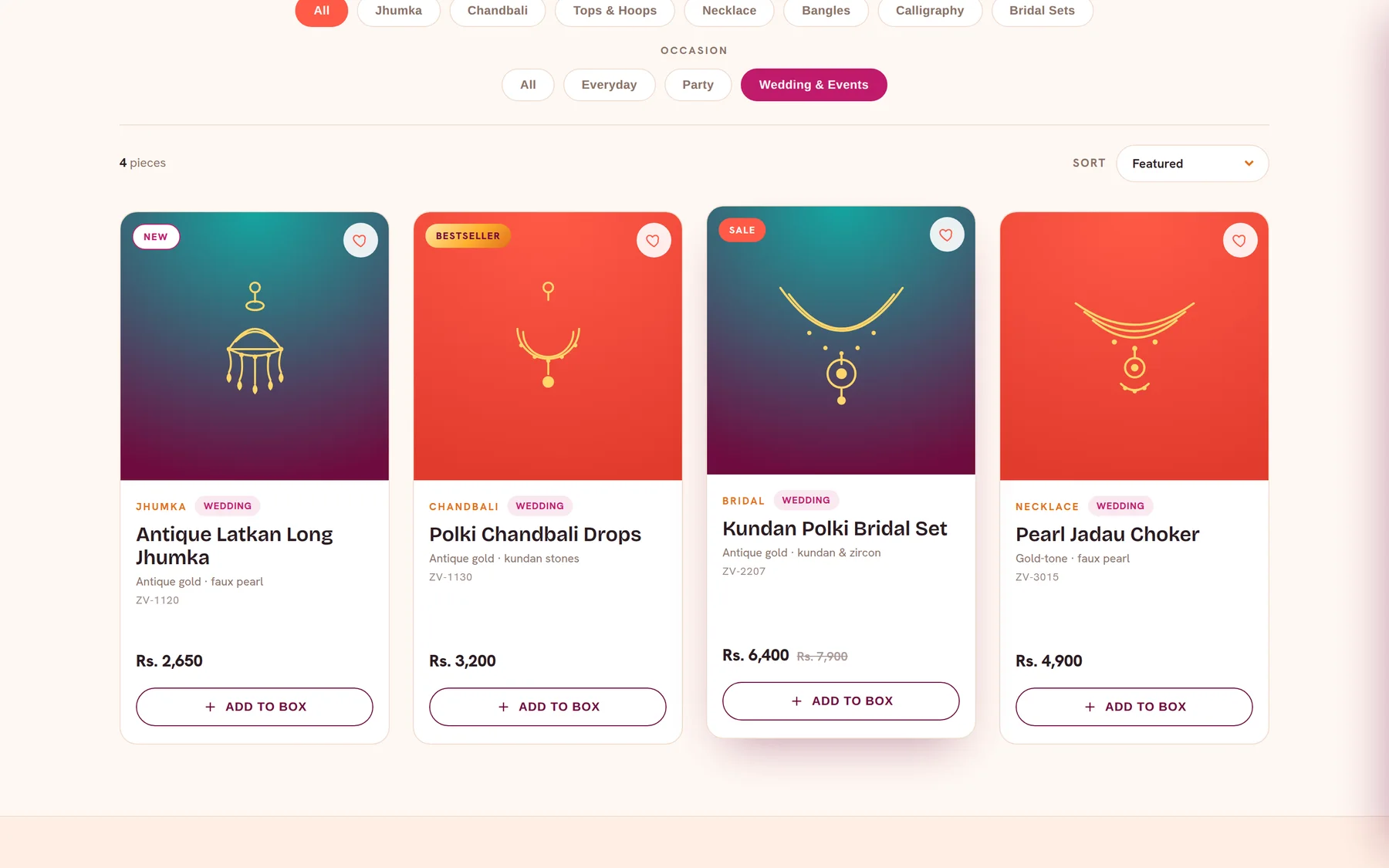
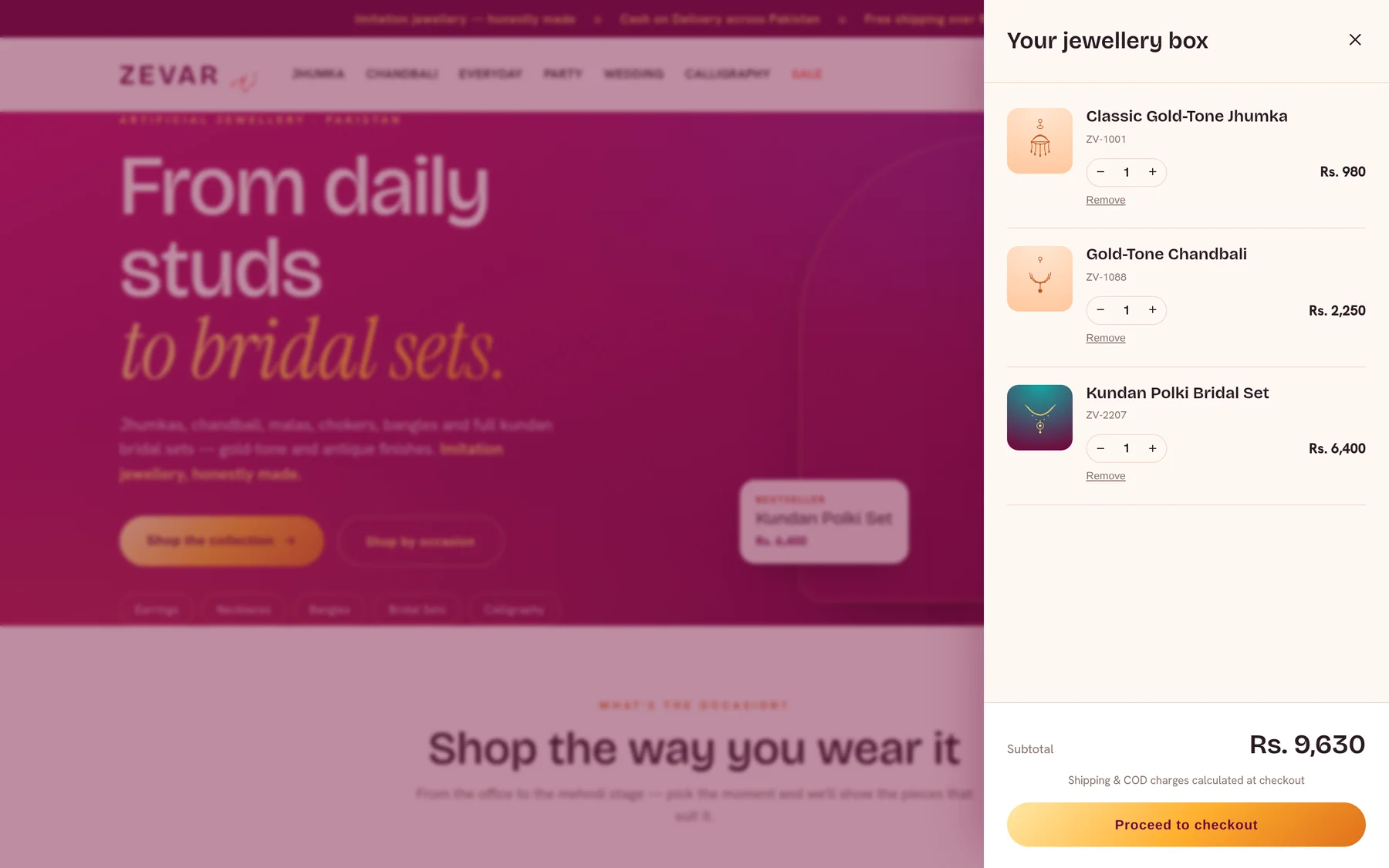
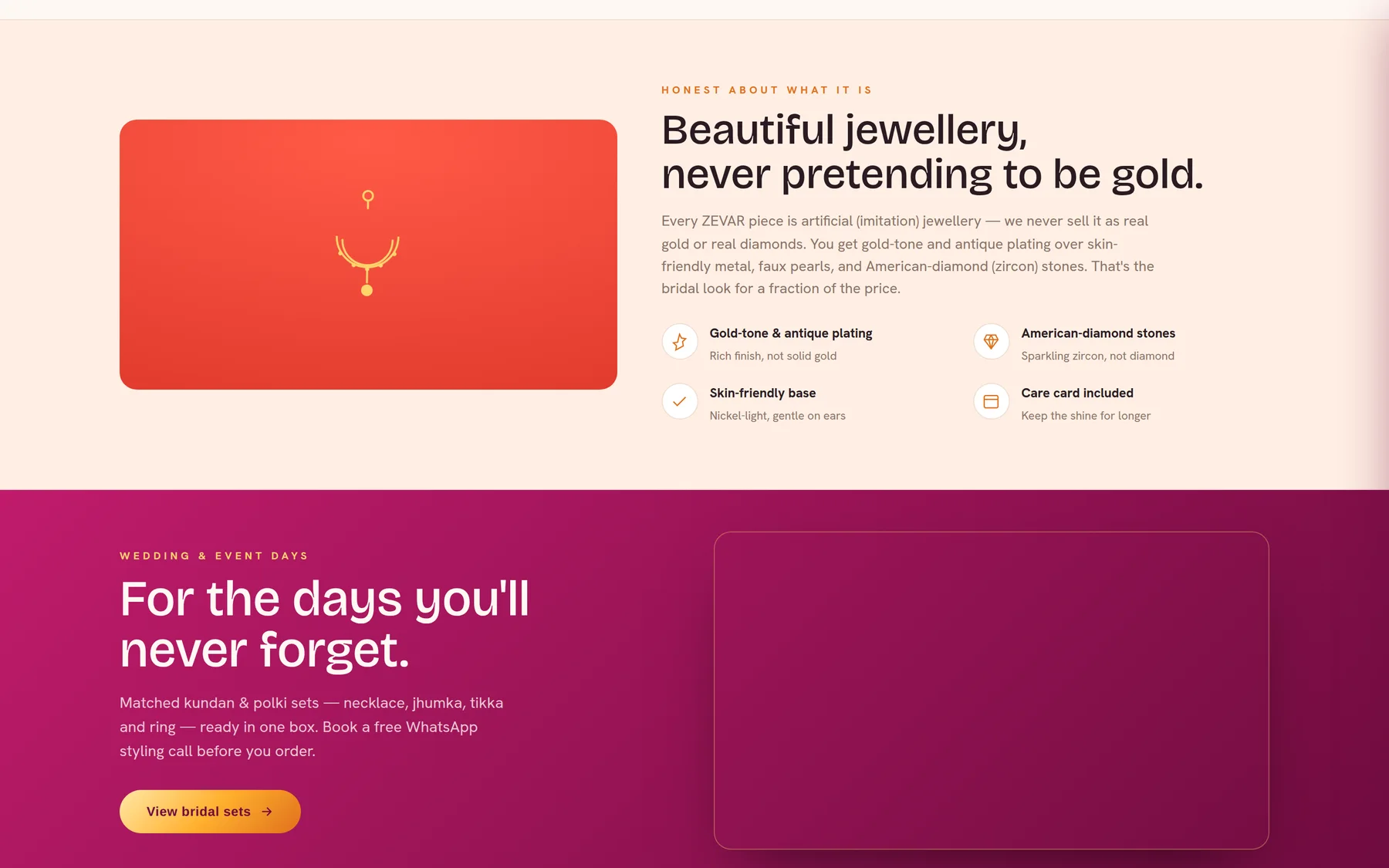
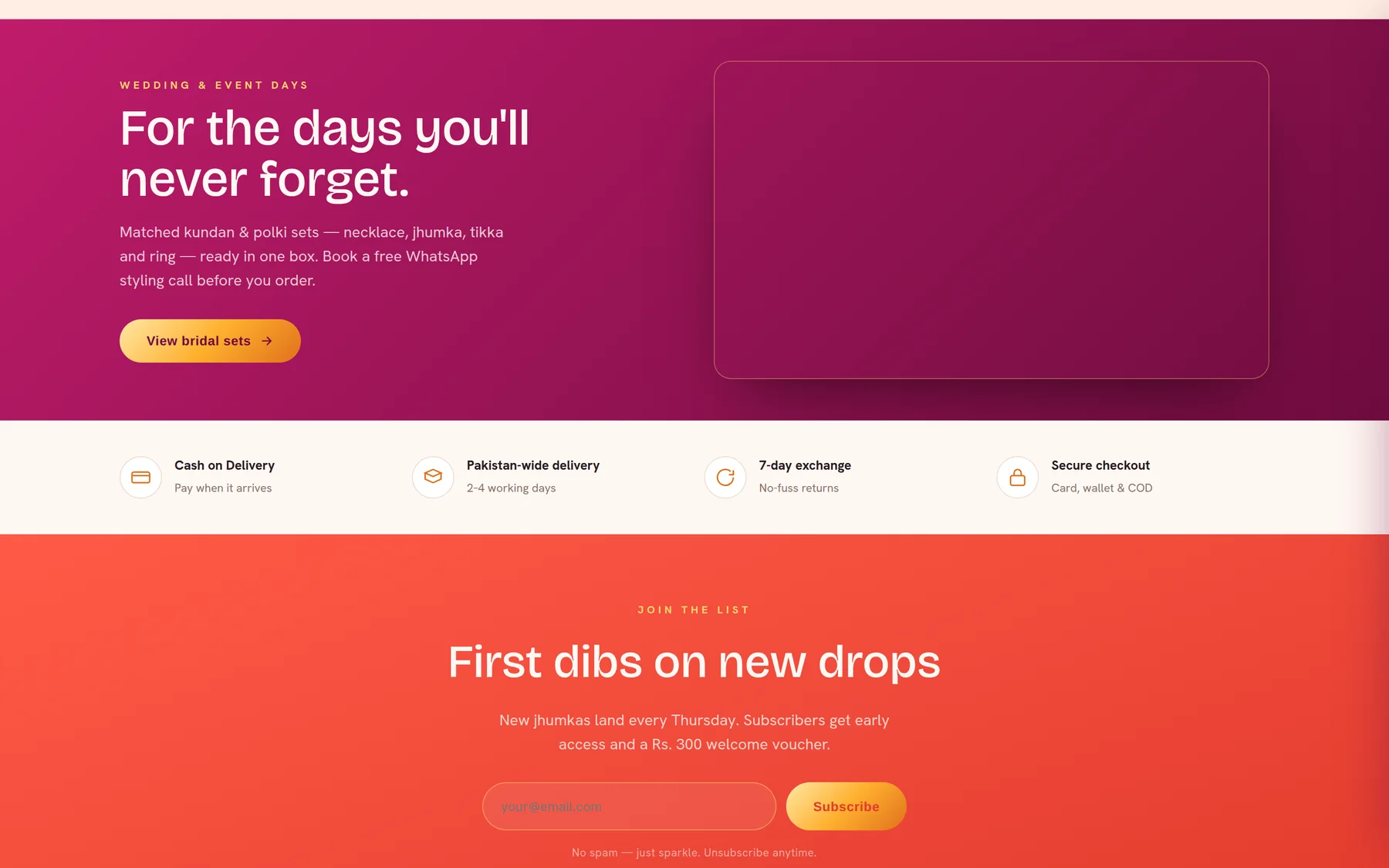
Scroll the image sideways to read it.
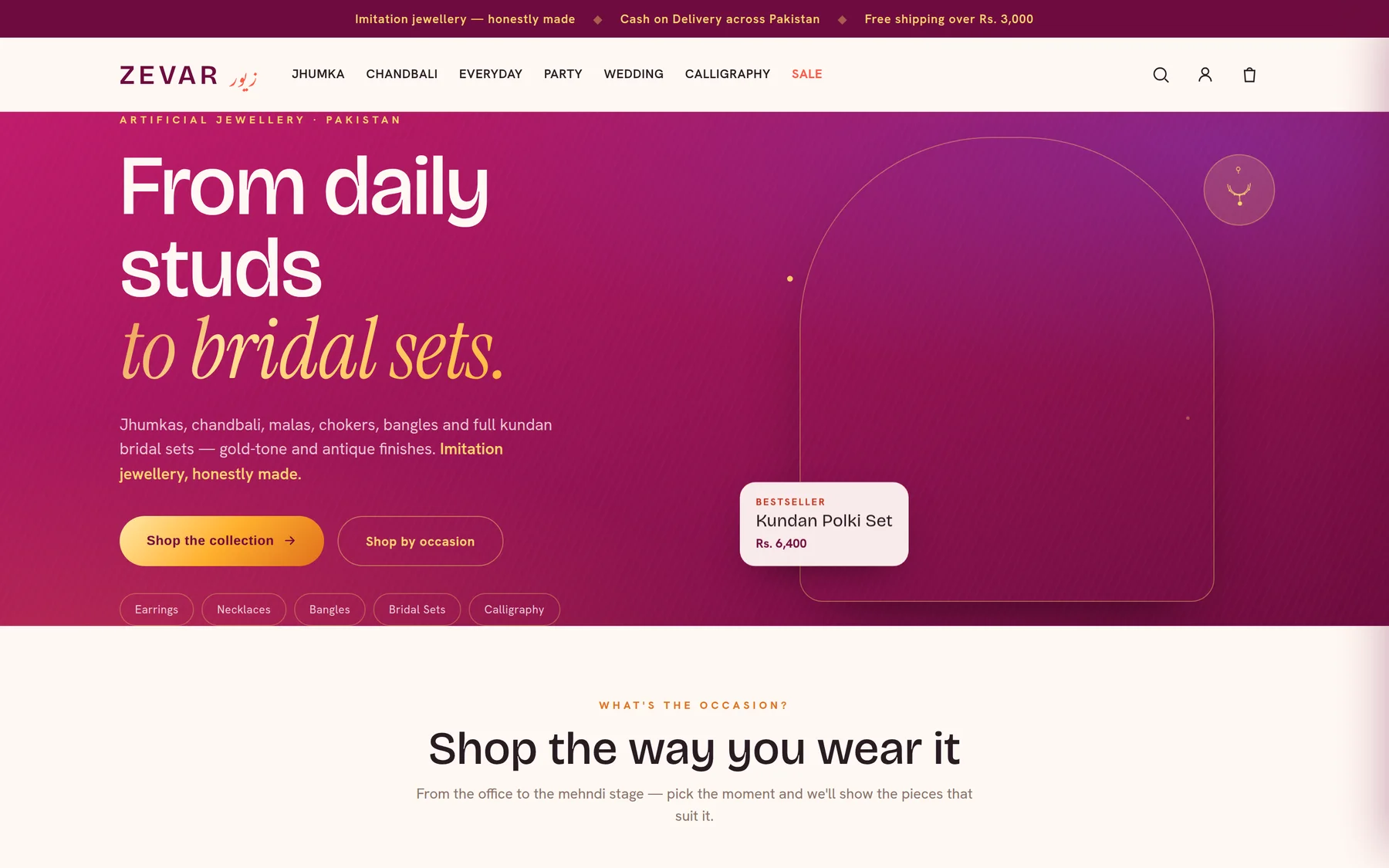
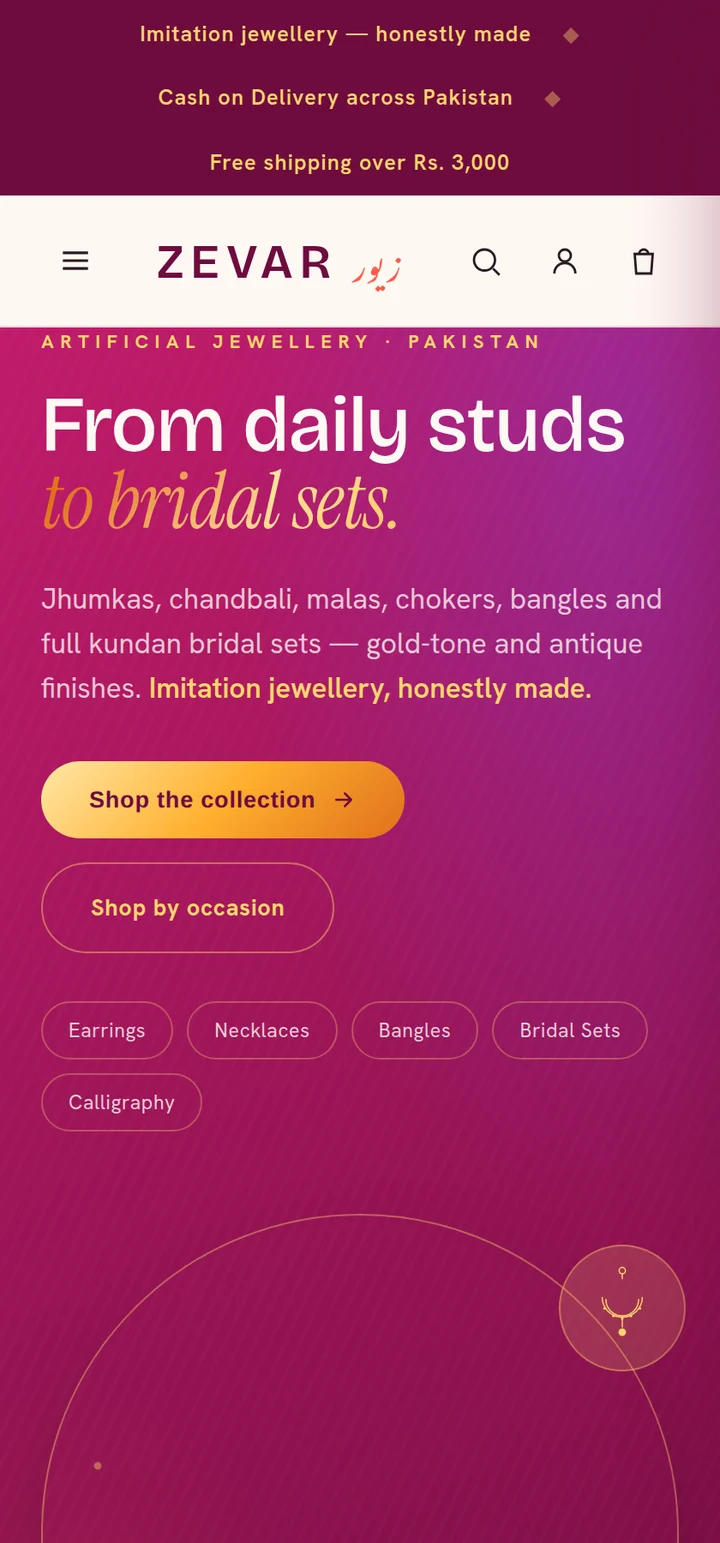
A wordmark in two scripts, and a promise in the first line
ZEVAR in Latin and زیور in Urdu, side by side — the brand reads correctly to both halves of its market. The headline covers the whole range in six words, and the fold states the thing most imitation-jewellery stores avoid: this is imitation jewellery, honestly made. Cash on Delivery and the free-shipping threshold sit above everything, because in this market they are the two facts that decide whether a stranger buys.
Real screens from the shipped storefront, which is live and open to visit. Product photography drops into these layouts as the client shoots it; the star ratings the store renders are withheld here because they are seeded values on a new shop, and this site does not republish review numbers it cannot vouch for.
Jewellery breaks stock ecommerce templates.
Four things about this category fight a generic store, and all four had to be designed around rather than worked around.
Photography is the whole sale
A generic grid shrinks the piece to a thumbnail beside a paragraph. Nobody buys jewellery from a paragraph.
Buyers shop by moment
The question is "what do I wear to this wedding?", never "show me your chandbali range".
Trust is the conversion problem
Imitation, plated, zircon, fine — a buyer who cannot tell which they are getting does not order.
Bridal is one purchase, not four
The biggest order in the store is a matched set, usually preceded by a conversation.
Eight decisions, and the reason for each.
None of these are stylistic. Each one exists because of something specific about selling jewellery online in this market.
The design is a pattern, not a one-off.
The thinking above is what took the time; the pieces, palette and photography are what make it one brand rather than another. Rebuilding it around a different jewellery business costs a fraction of designing one from nothing — and the same argument holds for any sector whose products refuse to sit in a stock template.
Carries over
Occasion-and-category filtering, the box, set merchandising, the materials pattern, the COD-first checkout.
Gets rebuilt
Wordmark, palette, typography, photography direction and the catalogue itself.
Also works for
Any catalogue where the photograph sells and stock categories fail — apparel, furniture, artisan goods.
Either platform
Shopify where you want stock and payments handled for you; custom where the merchandising fights a template.
Selling something a template keeps flattening?
Tell us what you sell and how your customers actually buy it. We'll scope the store honestly, quote a fixed price in writing within 24 hours of the call, and say so if the cheaper answer is the right one.
- 01Your catalogue — how many pieces, how they group, what changes weekly
- 02How buyers arrive — occasion, category, search, or a WhatsApp message
- 03How they pay — card, Cash on Delivery, bank transfer, or all three
- 04Photography — what you have, and what the shots need to look like