A 16-page institutional profile for a specialist eye hospital. Healthcare is where marketing does the most damage when it overstates, so the design brief was restraint: explain each service in the patient's words, source every medical sentence, and leave a clear space for facts only the hospital can supply.
This is a design concept, not client work. Aurelia is a fictional name; the photographs are licensed stock of people who are not clinicians or patients; services and roles are sample content. The profile says so on its cover and its credits page, and so do we.
- Sector
- Specialist ophthalmology
- Scope
- Institutional profile · 16 pages · print and PDF
- Status
- Design concept — fictional name, sample content
- Imagery
- Licensed stock, labelled as illustrative
All sixteen pages, as they were designed to be read.
Turn the pages with the arrows, a swipe, a click on either side, or your arrow keys. The note under each spread says why the page is the way it is.
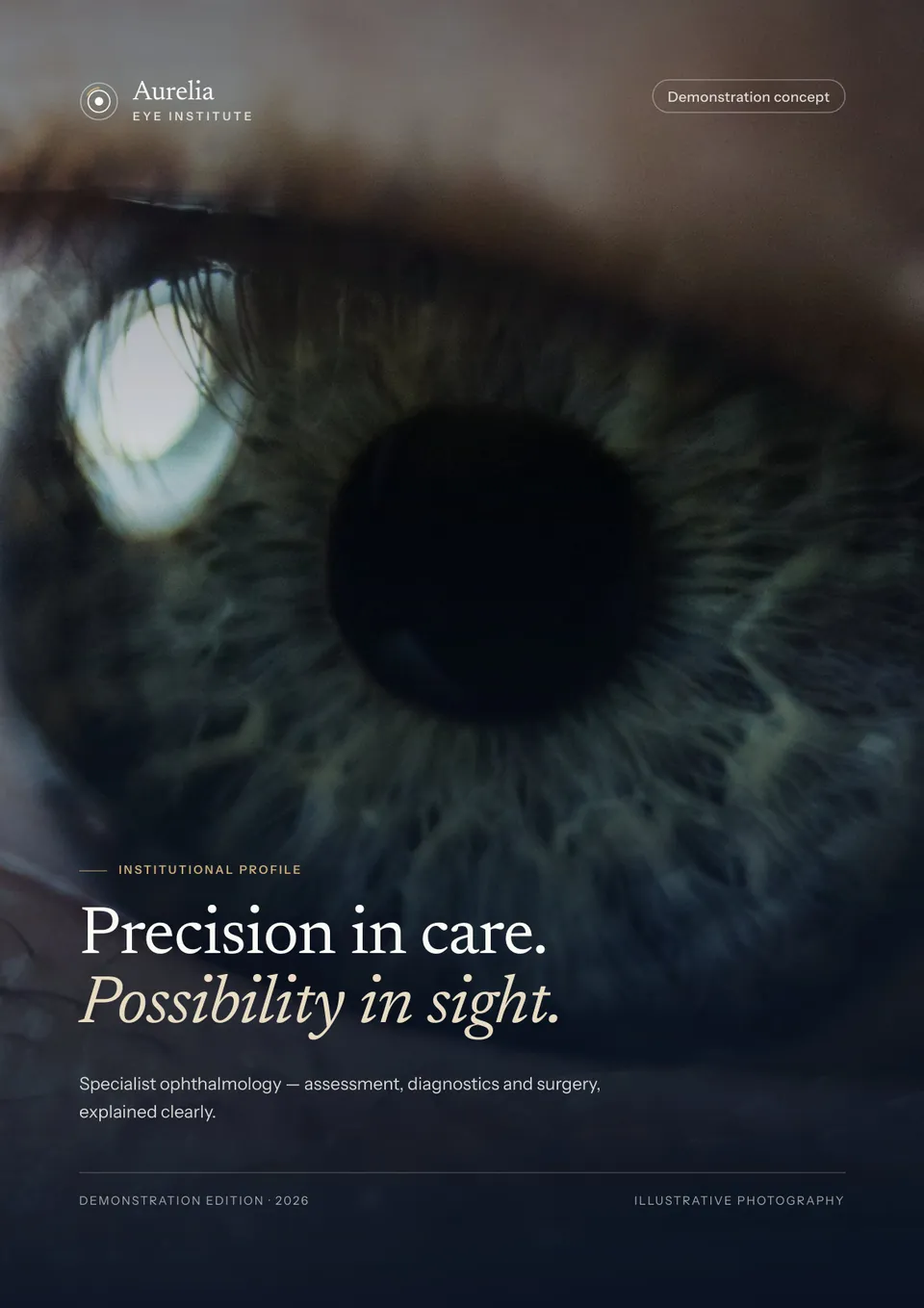
Seven decisions, most of them about restraint.
The visual language — calm, serif headlines, one warm gold accent — does its job quietly. The decisions that matter in a clinical document are about what it will and will not say.
The structure is finished. The facts are yours.
A clinic, hospital or practice brings its own name, people, photographs and verified credentials; the architecture, the tone and the discipline about claims carry over. The same approach applies to the website — see what patients check before they get in touch in our clinic website guide.
Carries over
Page architecture, service-overview format, the visit pathway, the urgent-symptoms treatment and the credits discipline.
Gets replaced
Name, identity, photography of your real premises and team, and every clinical fact — verified by your clinicians.
Also works for
Dental and aesthetic clinics, physiotherapy, diagnostics, veterinary practices — any service where trust is the product.
Print and web
The profile's structure maps directly onto a website: one page per service, a visit guide, and a consultant directory.
Need patients to trust you before they meet you?
Tell us about your clinic and what patients ask before they book. We'll scope the site or profile honestly, quote a fixed price in writing within 24 hours of the call, and never put a claim on it that you cannot stand behind.
- 01Your services — which ones patients search for, and how you explain them
- 02Your people — consultant profiles, registrations, what can be verified
- 03The visit — referrals, first appointments, what to bring
- 04What you can claim — and the evidence each claim needs